



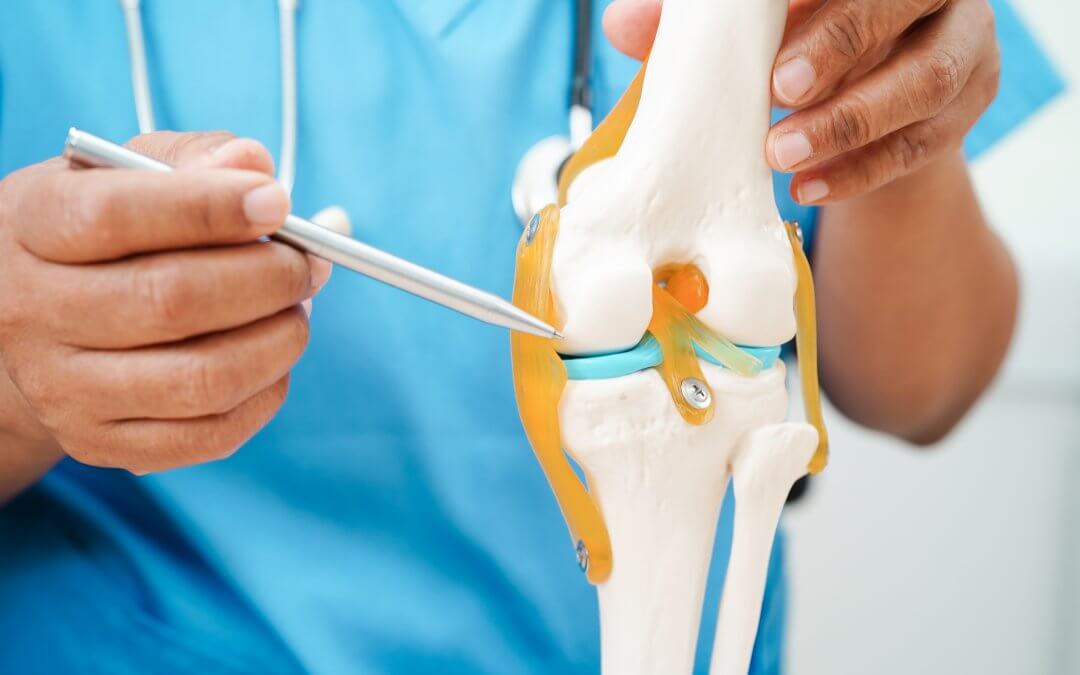
Joint pain and cartilage damage are among the chronic problems that restrict freedom of movement and seriously reduce the quality of life.
In cases where traditional treatment methods are insufficient, stem cell therapy is one of the most modern approaches aimed at biologically repairing tissue.
According to Assoc. Prof. Dr. Erdinç Özek, stem cell applications do not only mask the damage to the joint; it also improves the internal environment of the joint, activating natural repair mechanisms.
What is Joint and Cartilage Damage? Why Doesn’t It Heal On Its Own?
Cartilage is a smooth and flexible protective tissue that prevents joints from rubbing against each other.
Abrasions or traumatic tears in this tissue cause the bones to rub against each other over time and cause severe pain.
Unlike other tissues, cartilage damage is not a process that the body can repair by its own means; This necessitates medical intervention.
Non-vascular Structure of Cartilage Tissue and Repair Difficulties
The main disadvantage of cartilage tissue is the absence of blood vessels and nerves in it.
While other tissues in the body heal when damaged thanks to reparative cells that come through the blood, cartilage lacks this nutritional network.
Since there is no blood flow, cartilage cells cannot renew themselves and the damage expands over time and becomes chronic.
Joint Wear (Calcification) and Degenerative Processes
Osteoarthritis, popularly known as calcification, is the loss of function of cartilage tissue as a result of aging or overuse.
When the degenerative process begins, the quality of the joint fluid decreases and a chronic inflammation occurs in the joint.
This negatively affects not only the cartilage but also all the ligaments and muscle structures surrounding the joint, causing immobility.
Mechanism of Action of Stem Cells in Cartilage Repair
Stem cells are “smart” cells that can detect dead or damaged tissues in the joint and initiate repair for these areas.
The table below compares the two basic working principles of stem cells in joint treatment:
| Mechanism of Action | How it works | Benefit |
| Differentiation | Direct cell transformation | Formation of new cartilage tissue |
| Paracrine Effect | Biological signal secretion | Rapid reduction of pain and swelling |
Differentiation: Transformation into Cartilage Cells (Chondrocytes)
The most basic feature of stem cells is their ability to transform into the cell of that tissue according to the needs of the tissue they are placed in.
Mesenchymal stem cells injected into the joint develop into chondrocytes, the main cells of cartilage tissue, supporting structural repair.
According to Assoc. Prof. Dr. Erdinç Özek, this transformation process can significantly postpone the need for prosthetics by increasing the mechanical durability of the joint.
Paracrine Effect: Suppressing Inflammation and Pain Control
The mechanism that acts faster than the direct transformation of cells is the paracrine effect.
Stem cells regulate the “microenvironment” within the joint by secreting cytokines and growth factors into the area where they are injected.
In this way, chronic inflammation in the joint is extinguished, edema is reduced and a significant decrease in the patient’s pain level is observed.
In Which Joint Diseases Is Stem Cell Therapy Used?
Stem cell therapy offers the highest efficiency in cases where degeneration has not yet reached the final stage.
Knee Arthritis (Osteoarthritis) and Cartilage Loss
Since the knee joint is the area that carries the most body load, it is the most common area where stem cell applications are performed.
In mild and moderate calcifications, stem cells help maintain joint spacing and eliminate limitation of movement.
Hip and Shoulder Joint Problems
Avascular necrosis (bone death) in the hip joint and chronic tendon tears in the shoulder joint can be treated with stem cells.
Especially in impingement syndromes in the shoulder area, recovery can be achieved without surgery thanks to the regenerative power of the cells.
Sports Injuries: Meniscus and Ligament Damage
Stem cells are a powerful option for meniscus tears and anterior cruciate ligament injuries seen in professional athletes or active individuals.
This method shortens the athlete’s return time to the field by increasing the healing speed of the tissue.
According to Assoc. Prof. Dr. Erdinç Özek, the use of stem cells in sports injuries not only accelerates healing, but also helps the tissue regain its original flexibility.
Clinical Experience Note (Anonymous Case):
A 52-year-old patient whose walking distance decreased to 100 meters due to severe knee pain was administered stem cells obtained from his own adipose tissue. 3 months after treatment, a 70% reduction in the patient’s pain scores was recorded and it was observed that he returned to his daily walking activities.
Stem Cell Sources Used in Joint Treatment
Stem cells used in joint and cartilage repair are usually “autologous” cells obtained from the patient’s own body.
Depending on the region where the cell is taken, the effectiveness and application method may differ.
Bone Marrow-Derived Stem Cells (BMAC)
Bone marrow aspirate concentrate (BMAC) is considered the gold standard, especially in cartilage damage.
Bone marrow from the pelvis contains a high concentration of mesenchymal stem cells and growth factors.
According to Assoc. Prof. Dr. Erdinç Özek, bone marrow-derived cells are the cell group with the highest “chondrogenic” (cartilage-forming) potential.
Adipose Tissue (Adipose) Derived Stem Cells (SVF)
Stromal Vascular Fraction (SVF), obtained from adipose tissue in the abdominal region, is a very rich source of stem cells.
Cells taken from adipose tissue give very fast results in suppressing inflammation in the joint and controlling pain.
How Does the Stem Cell Application Process Work?
Stem cell therapy is a delicate process that requires advanced technology and sterilization from preparation to the moment of application.
Obtaining and Separating Cells (Centrifugation Process)
After the cell collection process is finished, the material obtained is placed in special closed-circuit centrifuge devices.
These devices separate the blood or fat into its components, separating the layer where the stem cells are most concentrated (the pure cell layer).
This process takes about 30 to 60 minutes and is performed at room temperature, without contact with the external environment, to maintain the viability of the cells.
Intra-articular Injection Method and Technical Details
The separated concentrated cells are injected directly into the damaged joint cavity with the help of a fine needle.
During the application, ultrasound or scopy devices are usually used to ensure that the needle reaches the exact area of cartilage damage.
According to Assoc. Prof. Dr. Erdinç Özek, pinpoint injections to the right location can double the effectiveness of the treatment.
Post-Procedure Recovery and Return to Daily Life
After the application, the patient can usually return home on the same day.
It is normal to feel a slight fullness or pain in the joint for the first 48 hours; This is a sign that the cells have started to work in the area.
Patients are advised to protect the joint from overload for the first few weeks, but support blood circulation with gentle movements.
Advantages of Stem Cell Therapy and Expected Results
Stem cell therapy offers a biological success as it uses the body’s own healing potential.
Postponing the Need for Surgery and the Last Stop Before Prosthesis
For many patients, stem cell therapy is the “last exit” before major surgical operations.
Especially in individuals who are young for prosthesis surgery or who do not want to carry the risks of surgery, the process may be postponed for years.
The table below summarizes the differences between stem cells and classical surgical methods:
| Feature | Stem Cell Therapy | Classical Surgery (Prosthesis) |
| Processing Time | 1-2 Hours | 2-4 Hours |
| Hospitalization | Not required (Same day discharge) | 3-5 Days |
| Recovery Time | 1-2 Weeks | 3-6 Months |
| Risks | Minimum (Infection, etc.) | Bleeding, Embolism, Prosthesis Loosening |
Factors Affecting the Success Rate of Treatment
Not every joint responds the same; The success rate depends on the patient’s age, weight, and the extent of damage.
According to Assoc. Prof. Dr. Erdinç Özek, having an ideal weight and adhering to the exercise program given after treatment are the most critical factors that extend the life of stem cells.
Frequently Asked Questions
When does the effect of the treatment start?
A decrease in pain is usually noticeable within the first 2-4 weeks; However, structural repair in cartilage can take 3 to 6 months to complete.
What does it mean to have my own cell?
The body does not perceive its own cell as a foreign substance; This completely eliminates the risk of allergies or tissue rejection.
How many times can stem cell therapy be applied?
Depending on the course of the disease, it can be repeated at intervals of 1-2 years if needed, but in most cases, a single application provides long-term relief.
Does calcification go away completely?
Calcification (osteoarthritis) is a chronic process; Stem cell slows down this process, repairs tissue and improves quality of life, but does not completely “reset” the process.
Clinical Experience Note (Anonymous Case):
In a 60-year-old patient who had difficulty climbing stairs and could not sleep due to night pain, combined bone marrow and adipose tissue were applied. In the control MRI taken at 6 months of the application, an increase in cartilage thickness was detected and it was noted that the patient completely stopped using painkillers.
Source and Expert Knowledge:
This article has been created with reference to Assoc. Prof. Dr. Erdinç Özek’s studies and clinical observations on orthopedic biological therapies. Assoc. Prof. Dr. Erdinç Özek is a medical professional who specializes in regenerative medicine and is considered an authority in innovative cell therapies for joint health.