
Skull deformities; These are structural anomalies that occur as a result of the bones that make up the skull in babies developing differently than normal, taking on an asymmetrical appearance, or premature closure of the growth lines called sutures between the skull bones.
This condition is more than just an aesthetic concern, it is a clinical picture that can restrict the normal development of the brain and can be treated with high success with both surgical and non-surgical methods when diagnosed early.
What are Skull Deformities?
Babies’ skulls do not consist of a single bone that is completely hardened when born.
To allow the brain to grow rapidly, the skull is made up of several different bone plates with flexible suture lines called “sutures” between them.
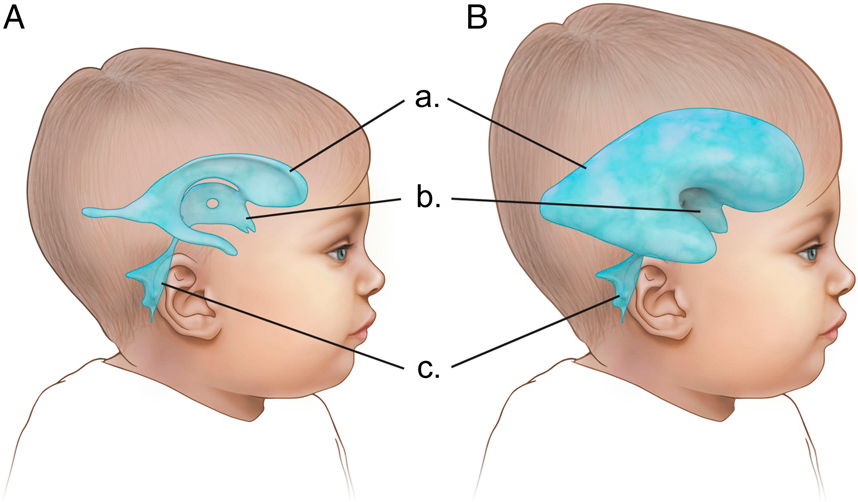
Skull deformity is a condition in which this flexible structure becomes asymmetrical with external factors (such as lying position) or these growth lines close untimely, changing the direction of growth of the brain.
Medically, these disorders are divided into two main categories, “positional deformities” and “craniosynostosis”; The most critical point that determines the course of treatment is the distinction between these two.
Causes of Skull Deformities
The reasons behind asymmetry or shape anomalies in the skull range from genetic factors to mechanical effects:
- Positional Factors (Mechanical Pressure): The most common cause is the constant pressure on the soft skull bones as a result of the baby being laid in the same direction all the time (the habit of sleeping on the back), the narrow space in the womb or multiple pregnancies.
- Craniosynostosis (Genetic and Developmental): It is the ossification of the suture lines between the skull bones before or immediately after birth, before the brain completes its development. The cause of this condition is not known exactly, but it may be associated with certain syndromes and genetic mutations.
- Neck Muscle Problems (Torticollis): The fact that the baby always turns his head to one side due to stiffness in the neck muscles causes flattening (plagiocephaly) in that area of the head.
- Premature Birth: The skull bones of premature babies are softer than normal and the lying positions during the intensive care process increase the risk of deformity.
According to Assoc. Prof. Dr. Erdinç Özek; “The biggest mistake in skull deformities is to wait by saying ‘it will get better as it grows’. If the problem is only positional pressure, yes, it can be corrected with a change of position. However, if the problem is premature closure of a suture line (craniosynostosis), brain development may be suppressed and this requires surgical intervention. The first 6 months are the ‘golden period’ for diagnosis and treatment planning.”
Comparison Table of Deformity Causes
| Cause | Type | Impact on Brain Development | Treatment Approach |
| Lying Position | Positional (Flat Head) | Usually does not affect | Positioning / Helmet |
| Early ossification | Craniosynostosis | Can print | Surgical Intervention |
| Neck stiffness | Torticollis | Performs secondary flattening | Physiotherapy / Exercise |
| Narrow Birth Canal | Transient Deformity | Does not affect | It resolves on its own |
Types of Skull Deformities
Skull deformities present with different clinical pictures depending on the affected area and the underlying cause.
The main distinction to understand these disorders is; It is between premature union of bones (craniosynostosis) and shape shifts (positional deformities) that develop only due to external pressure.
Both groups may look similar from the outside; However, the treatment methods are completely opposite.
Craniosynostosis (Early Closure)
Craniosynostosis is the ossification of one or more sutures (sutures) between the skull bones long before expected.
- Pathology: While growth stops along the closed suture line, the brain tries to expand towards the other open lines. This condition causes the head to become excessively elongated or enlarged in an abnormal direction.
- Critical Importance: It is not just an aesthetic issue; In some cases, it can lead to vision loss or developmental delays due to increased intracranial pressure. It usually requires surgical intervention.
Positional Deformities (Flat Head Syndrome)
This condition, popularly known as “flat head,” is usually not caused by the union of the bones, but rather by the constant external pressure exerted on the baby’s soft head.
- Causes: The baby is constantly lying on his back, always looking in the same direction, or congestion in the womb.
- Difference: Unlike craniosynostosis, the suture lines are open and do not pose an obstacle to brain development. It is mostly corrected with a change in position, special pillows or, in advanced cases, helmet treatment.
Plagiocephaly (Crooked Head)
It is when one side of the head flattens when viewed from behind, while the other side protrudes forward or outward.
- Appearance: When viewed from above, the skull has taken the shape of a parallelogram. The alignment of the ears may be different from each other and one eye/cheek may be more forward than the other.
- Prevalence: It is especially common in babies with “neck muscle stiffness” (torticollis), because the baby tends to always tilt his head to the flat in the same direction.
Brachycephaly (Flat Head)
It is a condition in which the entire back of the head is symmetrically flattened.
- Appearance: The head appears flattened from the back and wider than normal from the top. Head height (apex) may be higher than normal.
- Cause: It is usually associated with the baby being left in a full supine position all the time.
Scaphocephaly (Long Head)
It is the appearance of the head flattened from the sides and extremely long (boat-shaped) towards the front and back.
- Cause: It occurs when the suture called the “sagittal suture” extends from front to back from the middle of the head to close prematurely.
- Appearance: The baby’s head is much longer than normal when viewed from the side; however, the forehead and posterior protrusion (occiput) are quite prominent. It is the most common type of craniosynostosis.
According to Assoc. Prof. Dr. Erdinç Özek; “Head shape in babies is not just a ‘visual’ detail. For example, in a case of Scaphocephaly, the brain is forced forward and backward because it cannot grow sideways. Although this situation is sometimes reflected as just an aesthetic concern, it is actually an intervention in the anatomical journey of the brain. Families need to be the ‘doctor’s eye’; A millimetric asymmetry at ear level when viewed from the top of the head gives us the biggest clue for early diagnosis.”
Skull Deformities Comparison Table
| Type of Disorder | Outlook | Root Cause | Intervention Type |
| Plagiocephaly | Unilateral back flattening | Positional / Torticollis | Positioning / Helmet |
| Brachycephaly | Full back flattening, wide head | Constant lying on your back | Helmet / Abs exercise |
| Scaphocephaly | Narrow and elongated head | Sagittal Suture Closure | Usually Surgery |
| Trigonocephaly | Triangular forehead structure | Metopic Suture Closure | Surgery |
Symptoms and Diagnosis of Skull Deformities
Diagnosis of skull deformities usually begins in the first months of the baby, when parents or pediatricians notice asymmetry in the head structure.
Physical examination is the most powerful tool in the diagnostic phase. The physician checks whether there is an ossified line by palpating the baby’s head sutures (suture lines).
When necessary, low-dose Computed Tomography (CT) or radiation-free 3D Surface Scanning methods are used to see the bone structure clearly.
Differences Between Craniosynostosis and Positional Deformity
Differentiating between these two conditions is vital for proper treatment. Misdiagnosis can lead to unnecessary surgery or delay in a necessary surgery.
- Ear Level: In positional disorder, the ear on the flattened side shifts forward, while in craniosynostosis, the ear placement is usually symmetrical or shifts in a different direction.
- Forehead Structure: In the positional case, when the back side is flattened, the forehead on the same side protrudes forward. In craniosynostosis, on the other hand, a significant protrusion (back) or excessive narrowing of the forehead is observed, depending on the location of the suture.
- Fontanel: In positional disorder, the fontanel is usually open; In craniosynostosis, on the other hand, it tends to close prematurely.
Treatment Methods for Skull Deformities
The treatment plan is personalized based on the type of disorder and the age of the baby.
Helmet Treatment (Cranial Remodeling)
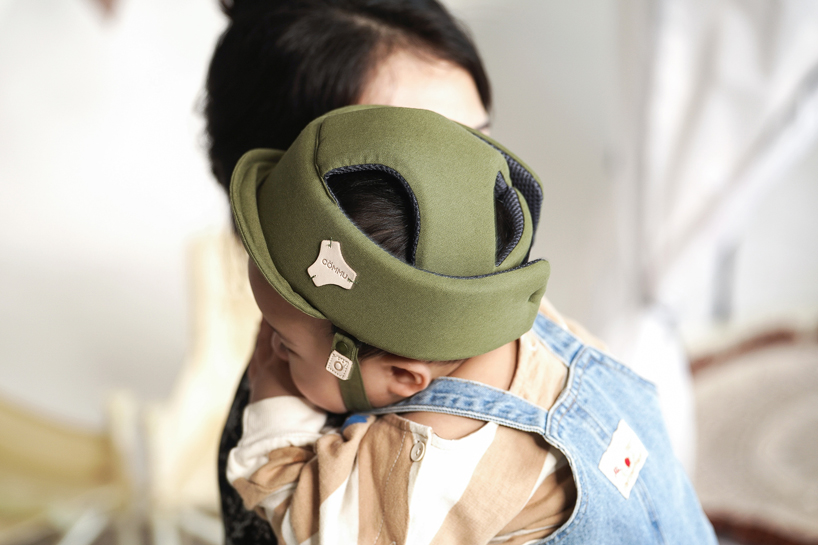
Helmet treatment is a non-surgical method used especially in moderate and severe positional deformities.
- Application: The baby’s head structure is measured with 3D scanners and a personalized helmet is produced.
- Working Principle: The helmet does not press on the protruding areas of the head, but leaves space for the growth of flattened areas. As the brain grows, the head expands into these cavities and regains its round form.
- Timing: The most effective period is between 4-9 months. After 12-14 months, its success decreases as the skull bones harden.
Surgical Intervention and Methods
The main treatment in cases of craniosynostosis is surgery. The aim is to open the closed suture and provide the brain with room to grow.
- Endoscopic (Closed) Surgery: It is a method that is performed with small incisions in babies diagnosed in the first 3-4 months and has a very fast recovery process. Postoperative surgery is usually supported by short-term helmet use.
- Open Restyling: It is a method in which the skull bones are repositioned in older babies or complex cases.
Positional Modifications and Physiotherapy
The first step in mild deformities is lifestyle adjustments.
- Tummy Time: While the baby is awake, the pressure on the head is removed and the neck muscles are strengthened by lying on the stomach under supervision.
- Changing Direction: The direction of lying and feeding positions in the baby’s bed are constantly changed.
- Physiotherapy: If the baby has neck muscle stiffness (torticollis), these muscles are relaxed with special exercises.
What happens if skull deformity is not treated?
The problems that may be encountered in untreated cases vary depending on the type of disorder:
- Psychosocial Problems: Significant head asymmetry at school age can negatively affect a child’s self-confidence and social relationships.
- Increased Intracranial Pressure: If craniosynostosis is not treated, the brain cannot find room to expand. This can lead to developmental delay, rarely vision loss and severe headaches.
- Chin and Facial Asymmetry: Untreated plagiocephaly can cause permanent facial asymmetry and tooth misalignment (orthodontic problems) in the future.
Frequently Asked Questions
Will helmet treatment hurt my baby?
Helmets do not put pressure on the brain, they only guide the direction of growth. Babies usually adapt to the helmet within a few days.
Is the head shape corrected by the lying position permanent?
Yes. The improvement achieved in the first 1 year is maintained for life after the skull bones harden.
How long does craniosynostosis surgery take?
While endoscopic methods take 1-1.5 hours, open surgeries may take 3-4 hours depending on the complexity of the case.
Resource and Expert Knowledge
This article has been prepared in light of Assoc. Prof. Dr. Erdinç Özek’s current clinical protocols for 2026 on pediatric neurosurgery, differential diagnosis of skull deformities, and advanced surgical techniques. Assoc. Prof. Dr. Erdinç Özek is a specialist with high experience in both minimally invasive and reconstructive surgical methods in the management of craniosynostosis.