

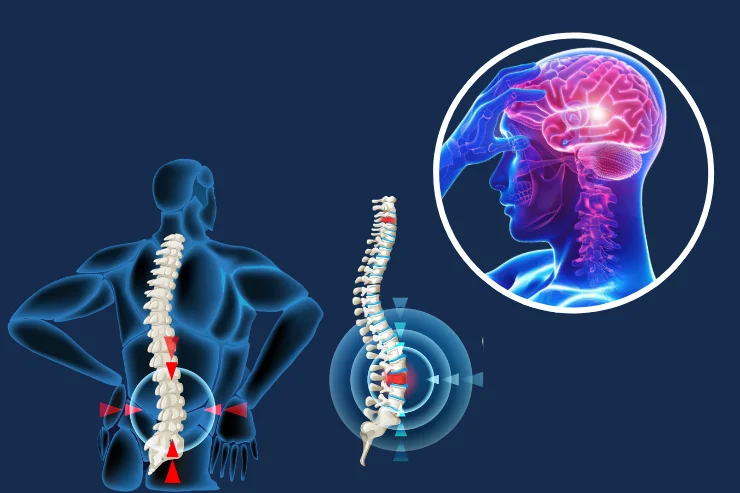



Pituitary tumors, or pituitary adenomas as they are medically known, are masses that originate from the pituitary gland, which is located at the base of the brain and is known as the “conductor” of the body.
These structures, which are mostly benign, can cause serious health problems by disrupting the hormone balance in the body or putting pressure on surrounding tissues (especially the optic nerves).
What is Pituitary Adenoma?
Pituitary adenoma is caused by the uncontrolled growth of cells in the pituitary gland, which is located in the bony cavity called “selia tursika” at the base of the skull.
This gland; It secretes hormones that govern vital functions such as growth, reproduction, metabolism, and stress response.
Adenomas usually do not spread outside the brain, but due to their critical location, they can excessively increase hormone production or prevent the gland from functioning properly, causing hormone deficiency.
According to Assoc. Prof. Dr. Erdinç Özek; “Pituitary adenomas should not be seen as just a ‘mass’. These tumors are dynamic structures that directly affect not only the physical but also the hormonal and mental balance of the patient. Our goals when planning the treatment; to eliminate the mass, protect visual functions and restore the disrupted hormonal balance.”
What are the Symptoms of Pituitary Tumor?
Symptoms of pituitary tumors are examined in two main groups depending on whether the tumor secretes hormones and its size.
Adenomas (macroadenomas) that reach large sizes grow upwards and put pressure on the optic nerve cross (optic chiasm) located right above them. This leads to visual field loss, which patients often describe as “I can’t see the sides”.
Symptoms of Hormone-Secreting (Functional) Adenoma
These tumors generate very specific clinical pictures according to the type of hormone they produce:
- Prolactinoma: Menstrual irregularity, milk coming from the breast and infertility in women; In men, it manifests itself with a decrease in sexual desire and erectile dysfunction.
- Growth Hormone Adenoma (Acromegaly): In adults, it is characterized by enlargement of the hands and feet, prominence of the jaw structure and enlargement of internal organs.
- ACTH-Secreting Adenoma (Cushing’s Disease): It causes excessive fat on the body, redness and rounding of the face (moon grandfather face), high blood pressure and purple cracks on the skin.
- TSH-Secreting Adenoma: It gives symptoms of hyperthyroidism such as palpitations, sweating and weight loss due to overactive thyroid gland.
Symptoms of Non-Functional Adenoma
Since these tumors do not produce hormones, they are usually only noticed when they reach a certain size and press on the surrounding tissues:
- Visual Disturbances: In particular, decreased peripheral vision (peripheral vision) and decreased visual acuity.
- Severe Headache: It occurs as a result of the pressure of the tumor on the outer membrane of the gland, rather than an increase in intracranial pressure.
- Hormonal Deficiency: As a result of the tumor crushing healthy pituitary tissue, symptoms such as fatigue, weakness and low blood pressure occur.
Clinical Experience Note (Anonymous Case): A 42-year-old patient who applied with the complaint of three sizes of shoe size growth in the last 2 years and coarsening of facial features was detected as a result of the examinations performed and a macroadenoma secreting growth hormone. It was determined that the patient had slight pressure on the optic nerves and the tumor was completely cleared by the “endoscopic transsphenoidal” method. Immediately after the operation, the patient’s hormonal values returned to normal and the soft tissue swelling regressed rapidly.
Causes and Risk Factors of Pituitary Tumors
Although it is still medically unclear why pituitary adenomas develop, research shows that this process is often triggered by genetic mutations.
It should be noted that, unlike competitors, the majority of these tumors are not hereditary and occur as a result of spontaneous (sporadic) cellular changes at any time in life.
- Genetic Mutations: Disruptions in the signaling pathways that control the growth of pituitary cells cause cells to multiply uncontrollably.
- Hereditary Syndromes: Although rare, genetically inherited diseases such as Multiple Endocrine Neoplasia Type 1 (MEN 1) increase the risk of tumor formation in the pituitary gland as well as other endocrine glands.
- Age Factor: Although pituitary tumors can occur at any age, the frequency of diagnosis is higher, especially in adults between the ages of 30-60.
Classification of Pituitary Adenomas
Our main criteria when classifying pituitary adenomas are the size and growth rate of the tumor. This classification is the most important determinant in choosing the treatment method (drug or surgery?).
Microadenomas
They are tumors that are less than 10 millimeters (1 cm) in diameter.
Microadenomas are usually not large enough to press on surrounding tissues. However, if they are of the hormone-secreting (functional) type, they can cause serious hormonal storms in the body, although they are very small. For example, an adenoma of only 3-4 mm can disrupt the patient’s entire metabolism by releasing excess cortisol.
Macroadenomas
They are tumors that are larger than 10 millimeters (1 cm) in diameter.
The main problem of these masses is their space-consuming effect. They press on the “optic chiasm” region, which is located above the pituitary gland and where the nerves from both eyes meet. This pressure can cause permanent vision loss over time. They can also crush the healthy tissues of the pituitary gland, stopping the production of essential hormones that the body needs.
| Feature | Microadenoma (< 10 mm) | Macroadenoma (> 10 mm) |
| The Fundamental Issue | Often excessive hormone release | Pressure on surrounding tissues and nerves |
| Risk of Vision Loss | Very low | High |
| How is the diagnosis usually made? | With hormone imbalance in blood tests | With visual impairment or severe headache |
| Follow-up / Treatment | If it is small and quiet, it can only be tracked | It usually requires surgical intervention |
According to Assoc. Prof. Dr. Erdinç Özek; “The growth direction of a pituitary adenoma is as critical as its millimeter size. A macroadenoma that extends sideways to the ‘cavernous sinus’ region, where the carotid arteries (carotid arteries) are located, requires a much more sensitive approach from a surgical point of view. What determines the success of the treatment is to analyze the anatomical neighborhoods of the tumor correctly in 3D before surgery.”
Clinical Experience Note (Anonymous Case):
In a patient who presented with complaints of persistent fatigue and unexplained weight gain, a microadenoma of only 6 mm in size was detected in the contrast MRI. However, blood tests showed that the hormone ACTH was excessively high. Since this small mass causes ‘Cushing’s Disease’, surgery was decided; After this 6 mm mass was removed by microsurgery, the patient’s entire metabolic balance returned to normal.
Diagnostic Methods
Diagnosis of pituitary adenomas requires a multidisciplinary approach. Since symptoms usually progress insidiously, both radiological and biochemical evidence is sought during the diagnosis phase.
- Hormone Panel (Blood Tests): The levels of hormones such as growth hormone, prolactin, ACTH and TSH secreted from the pituitary gland are measured. These tests determine whether the tumor is “functional” or not.
- Pituitary MRI (Magnetic Resonance): It is the gold standard of diagnosis. With the “Dynamic Pituitary MRI” protocol, the location of the tumor in the gland and its neighborhood with vital structures such as the carotid artery are examined with sections smaller than 1 mm.
- Visual Field Testing: It is performed to measure the degree of pressure on the optic nerve and loss of peripheral vision in patients with macroadenoma.
Pituitary Tumor Treatment Methods
Treatment of pituitary adenomas is personalized according to the patient’s complaints and the biological behavior of the tumor. Not every tumor requires surgery right away.
Drug Therapy (Medical Treatment)
Some pituitary tumors, particularly Prolactinomas, are extremely responsive to medication. With drugs called dopamine agonists, the tumor can both stop secreting hormones and shrink physically. In these cases, drug therapy is the first option and surgery is usually reserved.
Surgical Treatment: Endoscopic Transsphenoidal Surgery (Surgery on the Nominal Blade)
Today, more than 95% of pituitary surgery is performed with this closed method. In this procedure, which is performed by entering through the nostrils without opening the skull, high-resolution endoscopes are used.
- Technical Detail: The surgeon passes through the nose and reaches the “sinus” space at the base of the skull and removes the tumor under direct vision.
- Seamless Process: From the outside, there are no scars.
- Quick Recovery: Since the brain tissue is not touched, patients recover much faster.
Radiotherapy and Gamma Knife
It is preferred for small parts remaining after surgery or for patients with a very high risk of surgery. Stereotactic radiosurgery methods such as “Gamma Knife” preserve healthy tissues by pinpointing the tumor.
| Treatment Option | Main Purpose | Who is it suitable for? |
| Medication | Suppressing the hormone / Shrinking the tumor | Prolactinoma patients |
| Endoscopic Surgery | Removing the mass completely | Those who are at risk of vision loss or who do not improve with medication |
| Gamma Knife | Stop tumor growth | Recurrence or risky cases after surgery |
Assoc. Prof. Dr. Erdinç Özek: “Endoscopic surgery does not only mean entering through the nose; This method offers a ‘panoramic view’ that allows the surgeon to reach the most hidden corners of the tumor. However, preserving the anatomical integrity of the intranasal tissues is at least as important as removing the tumor. This balance determines the patient’s comfort after surgery.”
Recovery Process After Pituitary Surgery
Thanks to the endoscopic method, the healing process is considerably shortened.
- Hospitalization: Usually it is 2-3 days.
- Nose Care: There may be a slight feeling of fullness in the nose for the first few days. Intranasal hygiene is provided with special sprays and dressings.
- Hormonal Tracking: In the first 24 hours after surgery, the body’s water and salt balance is closely monitored.
- Restrictions: Heavy lifting, straining and blowing are prohibited for the first 4 weeks after surgery; because these actions can put pressure on the repair site at the base of the skull.
Frequently Asked Questions
Does pituitary surgery damage the brain?
In the transsphenoidal method, there is no contact with brain tissue; Directly into the bony cavity where the pituitary gland is located, is entered.
Will tumors form again after surgery?
In benign adenomas, the recurrence rate is low when complete removal is achieved; however, patients should continue MRI and hormone controls at regular intervals.
Will there be vision loss that comes back?
If the pressure on the optic nerve does not last too long and the nerve tissue does not die, a significant improvement in the visual field is observed immediately after surgery.
Resource and Expert Knowledge
This content has been prepared in the light of Assoc. Prof. Dr. Erdinç Özek’s scientific studies and clinical experience in the field of endoscopic skull base surgery and neuro-endocrinology. Assoc. Prof. Dr. Erdinç Özek is a surgeon who advocates the use of advanced technology in closed method pituitary surgery applications in Turkey and specializes in this field.
