

Head and spine traumas; It is the damage to the skull, brain, spinal bones or spinal cord tissue as a result of a physical impact (fall, accident, impact, etc.) from the outside.
These types of injuries are critical clinical conditions that require immediate medical attention as they threaten the integrity of the central nervous system and have a direct impact on vital functions and quality of life.
What are Head and Spine Traumas?
Head and spine traumas are the damage caused by mechanical energy to which the brain and spinal cord, which are the best protected but most sensitive parts of the body, are exposed.
While head injuries can range from a simple scrape to severe brain damage; Spinal trauma can impair the stability of the spine or crush the spinal nerves, leading to the risk of paralysis.
Modern medicine defines these traumas not only as “immediate damage” (primary damage), but also as a dynamic process that includes edema, bleeding and cell death (secondary damage) processes that may develop in the following hours.
Head Traumas
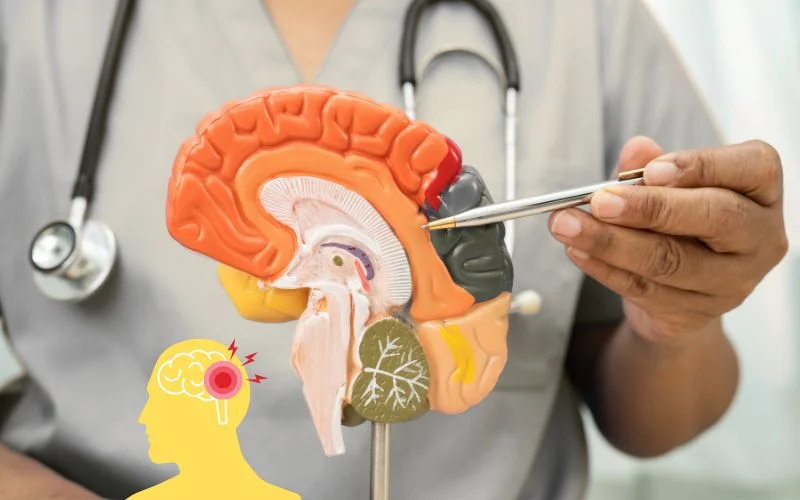
Head trauma encompasses any type of injury that affects the scalp, skull bone, or brain tissue.
In children and adults, the severity of the trauma generates different pathologies according to the speed of the blow and the angle of incidence. When brain tissue is rapidly displaced within the skull, micro-level ruptures, which we call “axonal injury”, may occur.
What are the Symptoms of Head Trauma?
Post-traumatic symptoms can sometimes appear within seconds and sometimes hours later. Follow-up is critical as this “quiet period” can be misleading:
- Changes in Consciousness: Fainting, tendency to sleep, confusion or unresponsiveness to the environment.
- Physical Symptoms: Severe and persistent headache, gushing vomiting, seizures.
- Sensory Losses: Blurred vision, tinnitus, slurred speech (lisping).
- Neurological Signs: Different size of the pupils (anisocoria), loss of strength/numbness in the arms or legs.
Types and Classification of Head Trauma
In the medical literature, head injuries are classified according to a scoring system called the “Glasgow Coma Scale” (GCS) and the nature of the damage:
- Mild Head Trauma (Concussion): There is usually no structural damage, but there may be temporary loss of consciousness or lightheadedness.
- Moderate and Severe Traumas: There is crushing (contusion) or bleeding (hematoma) in the brain tissue.
- Skull Fractures: Closed fractures or conditions in which the bone collapses in (compression fracture) and puts pressure on the brain.
- Intracranial Hemorrhages: Epidural (between the bone and the meninges) or subdural (under the meninges) hemorrhages; these may require immediate surgical draining.
Diagnosis and First Intervention in Head Trauma
Speed is at least as important as surgical competence in the diagnostic process.
- First Responder (ABC): Airway patency, control of breathing and circulation is the first rule. In the event of trauma, the patient’s neck must be fixed (due to suspicion of spinal damage).
- Computed Tomography (CT): It is the fastest diagnostic tool that shows acute bleeding and bone fractures within minutes.
- Neurological Follow-up: The patient’s pupillary light reflex and motor responses should be monitored hourly.
Assoc. Prof. Dr. Erdinç Özek; “The ‘golden hour’ rule applies to head traumas. The risk of epidural bleeding is high, especially in patients who regain consciousness immediately after trauma and get worse a few hours later. Therefore, even if no scars are visible from the outside, it is vital that the person subjected to the impact is kept under expert supervision or observed very closely for the first 24 hours.”
Head Trauma Severity and Observation Duration Table
| Type of Trauma | GKS Score | Characteristic Feature | Recommended Approach |
| Lightweight | 13 – 15 | Short-term confusion | 24-Hour Home Monitoring |
| Medium | 9 – 12 | Prolonged loss of consciousness, drowsiness | Hospitalization / Imaging |
| Heavy | 3 – 8 | Near coma/Comatose state | Emergency Intensive Care and Response |
Spine and Spinal Cord Traumas
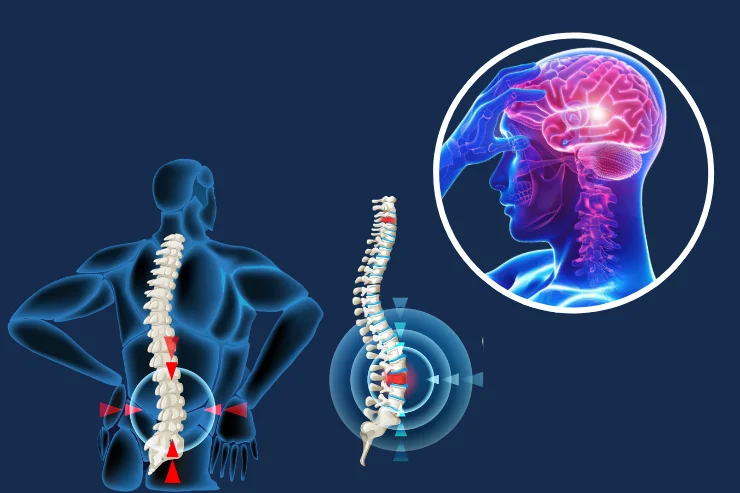
Spinal traumas are serious injuries that are characterized by the fracture or displacement of the spinal bones (vertebrae), the main carrier column of the body, and threaten the spinal cord passing through it.
Since the spinal cord acts as a “main cable” that transmits commands from the brain to the body, damage in this area means a risk of permanent paralysis, not just bone fractures.
The main goal of our surgical approach is to remove the pressure on the spinal cord and restore the mechanical stability of the spine.
Causes of Spinal Injuries
Spinal injuries usually occur as a result of high-energy trauma.
- Traffic Accidents: It is the most common cause and usually leads to multi-site injuries.
- Falls from Heights: It causes spinal fractures as a result of loss of balance, especially in construction workers or the elderly.
- Shallow Water Immersion: It is a specific type of trauma that leads to fracture of the cervical spine and sudden paralysis.
- Sports Injuries: It can develop as a result of uncontrolled movements in skiing, horse riding or contact sports.
Spinal Cord Injury Symptoms
Although symptoms vary depending on the level of damage, the following findings require urgent attention:
- Sudden Power Loss: Inability to move the arms or legs.
- Sensory Changes: Numbness, numbness or tingling in the body below a certain level.
- Loss of Reflexes: Sudden loss of urinary or stool control (an indication of emergency surgery).
- Severe Back and Neck Pain: Tenderness at the trauma site and pain that increases with touch.
- Shortness of Breath: It occurs when the respiratory muscles are affected in neck injuries.
Damages by Level in Spinal Traumas
Which segment of the spine the damage is in determines the patient’s future quality of life:
- Cervical (Neck) Region: It is the most critical level. It can result in paralysis of the whole body (arms and legs) (tetraplegia).
- Thoracic (Back) Region: It usually leads to paralysis of the legs (paraplegia) and loss of trunk control.
- Lumbar (Waist) Region: Weakness in the legs, urinary/fecal dysfunction and loss of sexual function may occur.
Surgical Treatment Methods in Head and Spine Trauma
Surgical intervention is based on the principle of “race against time”. The sooner the pressure on the nerve tissue is removed, the greater the potential for healing.
- Decompression (Pressure Removal): It is a procedure to remove a blood clot (hematoma), bone fragment, or edema on the brain or spinal cord.
- Craniectomy: It is the temporary removal of part of the skull bone to allow swelling of the brain in head injuries.
- Stabilization (Platinum/Screw Applications): To fix the fractured spine, “internal plastering” is performed using titanium screws and rods.
- Minimally Invasive Techniques: In some spinal fractures, bone strengthening can be achieved with closed methods (kyphoplasty/vertebroplasty) without making large incisions.
According to Assoc. Prof. Dr. Erdinç Özek; “The most dangerous stage in spinal trauma is the process of transferring the patient from the accident site to the hospital. A ‘wrong carry’ can cause a lifelong stroke. Our first goal in the patient who comes to the surgical table; is to save the nerve under pressure. It should not be forgotten that intervention within the first 8 hours in spinal cord injuries is the critical threshold that maximizes the possibility of functional return.”
Comparison Table: Surgical Urgency in Trauma
| Status | Surgical Target | Urgency | Technical |
| Epidural Hematoma | Evacuation of bleeding | Very High (Minutes) | Craniotomy |
| Compression Fracture | Removing brain compression | High (Hours) | Elevation |
| Unstable Spine | Protection of the spinal cord | High | Stabilization / Screw |
| Spinal Cord Crush | Decompression | Critical (First 8 Hours) | Laminectomy |
Post-Traumatic Recovery and Rehabilitation Process
Recovery after head and spine trauma depends on a disciplined rehabilitation process as well as the success of surgical intervention.
Nerve tissue healing is a slow process and requires patience. The recovery period usually consists of the following stages:
- Acute Period: The first few weeks after surgery pass with the control of edema and the beginning of tissue healing. In this process, the patient is closely monitored.
- Physical Therapy and Rehabilitation: Passive exercises are started early to maintain muscle strength and increase mobility in spinal traumas.
- Neuro-Rehabilitation: In head injuries, it is aimed to restore speech, memory and motor functions by using the brain’s “neuroplasticity” (self-restructuring) ability.
- Long-Term Follow-Up: Brain and spinal cord healing can take anywhere from 6 months to 2 years. Regular MRI and clinical check-ups are vital in this process.
Emergency Management in Head and Spine Traumas (When to Go to the Doctor?)
Not every bump or fall requires a neurosurgical operation, but some signs are a “red alert”.
If you notice even one of the following symptoms, you should immediately apply to a full-fledged hospital:
- Loss of Consciousness: Fainting, even for a short time.
- Recurrent Vomiting: Gushing vomiting rather than nausea.
- Neurological Losses: Sudden onset of numbness, loss of strength, tingling in the arms or legs.
- Pupil Inequality: One pupil is wider than the other.
- Loss of Balance and Coordination: Wobble while walking or mixing words together while talking.
- Dynamic Pain: Headache or back pain that does not go away with rest and gradually increases in severity.
Clinical Experience Note (Anonymous Case):
A patient who developed a “cervical spine fracture” and complete paralysis of the legs (paraplegia) after a traffic accident underwent emergency stabilization and decompression surgery at the 4th hour of the trauma. As a result of the 12-month intensive neuro-rehabilitation program after surgery, the patient reached the capacity to walk without support. This case demonstrates that early surgical intervention and disciplined rehabilitation, when combined, can yield miraculous results.
Frequently Asked Questions
Should the patient not be put to sleep after a head injury?
Contrary to this old belief, the patient can sleep after being examined and having a CT scan. However, during the first 24 hours, it should be checked periodically whether the patient can be easily awakened and whether he/she responds logically to the questions asked.
Does a spinal fracture always mean paralysis?
Not every spinal fracture damages the spinal cord. Many types of fractures can be treated with timely brace treatment or surgical fixation (screw/platinum) without nerve damage.
Should the screws inserted in the surgery be removed later?
Titanium screws used in modern surgery are generally compatible with the body and can remain in place for life as long as they do not cause a complaint in the patient (if there is no infection or mechanical problem).
Recovery Process Comparison Table
| Trauma Level | Hospital Stay | Physical Therapy Requirement | Complete Recovery Prediction |
| Mild Head Injury | 24 Hours | Usually not required | 1-2 Weeks |
| Skull Collapse Fracture | 3-5 Days | Cognitive support may be required | 2-3 Months |
| Stable Spine Fracture | 2-4 Days | Mild | 3-6 Months |
| Spinal Cord Injury | 7-14 Days | Very High (Intensive Program) | 1-2 Years |
Resource and Expert Knowledge
This article was prepared in the light of Assoc. Prof. Dr. Erdinç Özek’s current clinical experience in 2026 on the surgical management of head and spine traumas, acute neurological approaches, and rehabilitation protocols. Assoc. Prof. Dr. Erdinç Özek is an authority specializing in surgical interventions targeting functional recovery in traumatic brain and spinal cord injuries.