




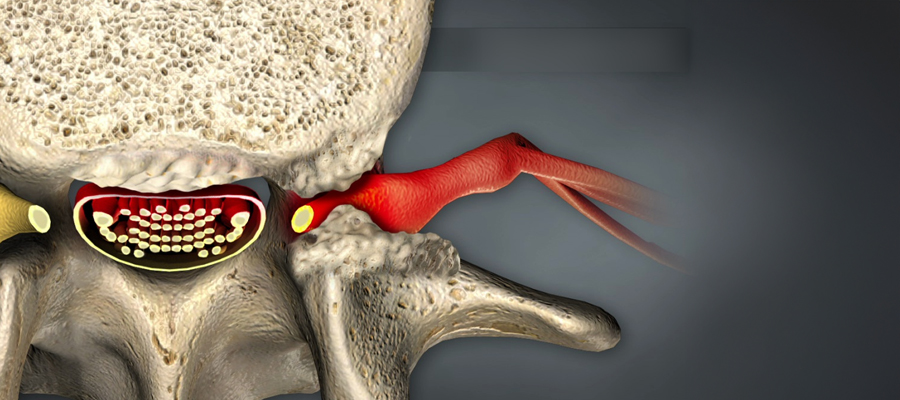
Spinal cord narrowing is a condition in which the nerve canals running through the spine narrow due to structural changes, putting mechanical pressure on the spinal cord or nerve roots.
This narrowing is a progressive process that disrupts the blood supply to the nerves and restricts electrical conduction, leading to chronic functional losses such as pain, numbness, and difficulty walking.
What is Spinal Stenosis?
Spinal stenosis is a medical condition characterized by the narrowing of the spinal canal (spinal canal) or the spaces where nerves exit the canal (foramen).
Normally, the spinal canal acts as a wide tunnel that protects nerve tissues; The diameter of this tunnel narrows as a result of aging, calcification or trauma.
Since the nerves under pressure cannot get enough oxygen and nutrients, especially while moving, the patient experiences leg pain called “neurogenic claudication”, which goes away at rest but increases when walking.
Causes of Spinal Cord Narrowing
Canal narrowing is usually caused by a combination of degenerative processes that develop over time, rather than a single cause.
- Osteoarthritis and Calcification: With age, bone spurs (osteophytes) that form in the spinal joints (facet joints) grow into the canal.
- Ligament Hypertrophy: The yellow ligament (ligamentum flavum) that holds the spine together thickens and occupies space from the back of the canal inwards.
- Herniated Discs: The loss of height of the discs and their protrusion towards the back narrows the canal volume.
- Spondylolisthesis (Slipped Waist): One vertebral bone slides forward on the other, disrupting the canal alignment.
- Congenital Stenosis: Some people have congenital spinal canals that are narrower than normal (structural stenosis).
According to Assoc. Prof. Dr. Erdinç Özek; “Spinal cord narrowing does not occur overnight. It is usually the result of a wear process that lasts for years in individuals over the age of 50. The important thing is to analyze clinically accurately whether this narrowing leaves permanent damage to the nerve tissue.”
What are the Symptoms of Spinal Cord Narrowing?
Symptoms vary dramatically depending on which part of the spine the narrowing is in and usually progress insidiously.
Symptoms of Canal Narrowing in the Lumbar Region
This condition, known as lumbar spinal stenosis, is the most common form and mainly affects the legs.
- Neurogenic Claudation: Feeling the need to stop due to cramps, feeling of heaviness and pain in the legs after walking a certain distance.
- Relief when leaning forward: Patients usually state that when they lean forward (such as leaning on a shopping cart), their pain decreases with the expansion of the canal.
- Low Back and Hip Pain: Constant restlessness in the lumbar region and blunt pain in the buttocks.
- Weakness in the Legs: Loss of control or a feeling of getting stuck in the feet in advanced stages.
Symptoms of Canal Narrowing in the Neck Area
Cervical spinal stenosis can be more risky than narrowing in the lumbar region, as it can directly affect the spinal cord.
- Deterioration in Manual Skills: Difficulty with fine motor skills such as buttoning shirts, writing or eating.
- Gait and Balance Disorder: Drunken gait or feeling of stiffness (spasticity) in the legs.
- Electrification in the Arms: A feeling of shock that goes down to the arms or lower back when moving the neck (Lhermitte’s sign).
- Muscle Atrophy: Significant wasting and weakness in the hand and arm muscles.
Clinical Experience Note (Anonymous Case): A 65-year-old patient presented with complaints of inability to walk more than 100 meters and “felting” in the legs. On examination, it was seen that the patient walked leaning forward (flexion posture). This is a typical sign of lumbar stenosis and after surgical expansion of the canal (decompression), the patient’s walking distance has become unrestricted.
How is Spinal Cord Stenosis Diagnosed?
The diagnosis of spinal cord narrowing begins with listening to the patient’s walking distance and pain characteristics.
In clinical examination, the physician; It tests in detail areas with muscle strength, deep tendon reflexes and sensory loss.
- MRI (Magnetic Resonance): It is the method that most clearly shows the narrowing of the canal diameter, the degree of compression of the nerve roots and soft tissue thickening.
- CT (Computed Tomography) and CT Myelography: It is a preferred alternative for detailed examination of bone structures and for patients who cannot undergo MRI.
- Dynamic X-ray Graphics: It is used to understand whether the vertebrae slide (instability) relative to each other during the forward and backward bending of the spine.
Spinal Cord Stenosis Treatment Methods
The treatment plan is determined according to the severity of the narrowing and the neurological condition of the patient. Our goal is to relieve the nerves under pressure and restore the patient’s mobility.
Non-Surgical Treatment Methods
In mild to moderate narrowing, non-surgical methods can control symptoms.
Medication
Non-steroidal anti-inflammatory drugs and specific nerve pain medications are prescribed to reduce edema around the nerve and relieve neuropathic pain.
Physical Therapy
Strengthening the abdominal and back muscles allows the load on the spine to be balanced. In particular, posture training helps the patient to move in a way that keeps the canal diameter as wide as possible.
Steroid Injections
Epidural steroid injections into the canal or around the nerve root can provide temporary but effective relief by suppressing inflammation in severe pain attacks.
Surgical Treatment Methods
Surgery is mandatory in cases where non-surgical methods are insufficient, the patient’s walking distance falls below 100-200 meters, or urinary/fecal control problems begin.
Laminectomy
It is the most commonly used “decompression” method for narrowing in the waist region. A new and large area is created for the nerves by removing a part of the bony roof called the “lamina” at the back of the vertebra.
Laminoplasty
It is especially preferred for narrowing in the neck area (cervical). The bone is not completely removed; The canal is widened by opening like a valve and then this opening is fixed with titanium plates. This method provides an advantage in maintaining spinal stability.
Spinal Fusion (Screwing)
If the narrowing is accompanied by lumbar slippage or spinal instability, the bones are fixed together (screwing) in addition to decompression.
| Method | Application Purpose | Hospital Stay |
| Laminectomy | Opening the nerve canal completely from the back | 1-2 Days |
| Laminoplasty | Widening the neck canal and protecting the structure | 2 Days |
| Spinal Fusion | Preventing and fixing spine slippage | 2-3 Days |
According to Assoc. Prof. Dr. Erdinç Özek; “It is a big mistake to act by looking at ‘only the MRI image’ when making a surgical decision. Many patients may not have complaints even though the canal is narrow. For us, the main criterion is how far the patient can walk in everyday life and whether the nerve damage has progressed.”
Recovery Process After Spinal Cord Stenosis Surgery
After surgeries performed with modern techniques, patients are usually stood up on the same day or the next day.
- First 4 Weeks: Heavy lifting, sudden bending and twisting movements should be avoided.
- Walks: After the surgery, it starts with short-distance indoor walks and the distance is increased every day.
- Return to Work: A recovery period of 2-4 weeks may be required for desk workers and 3 months for heavy workers.
Frequently Asked Questions
Can canal narrowing go away with medication?
Drugs cannot expand the narrowed bone structure; It only reduces the pain and edema caused by the pinched nerve. The definitive solution to structural shrinkage is to eliminate mechanical stress.
Will there be narrowing again after surgery?
Re-narrowing at the surgical level is rare. However, new narrowing due to aging can be seen at other spinal levels.
Does canal narrowing cause paralysis?
Especially if narrowing in the neck area (cervical stenosis) is not treated, it can carry the risk of permanent loss of strength and paralysis in the hands and legs.
Clinical Experience Note (Anonymous Case):
In a 70-year-old patient who had burning feet and the need to take constant breaks while walking, the canal was widened with the lumbar laminectomy method. 3 months after the operation, the patient’s pain-free walking distance increased up to 1 kilometer, and a significant increase in the quality of life was observed.
Source and Expert Knowledge:
This article is based on Assoc. Prof. Dr. Erdinç Özek’s clinical experience in complex spine surgery and microneurosurgery and the medical literature of 2026. Assoc. Prof. Dr. Erdinç Özek is a specialist known for his nerve-sparing approaches in the surgical treatment of spinal stenosis.
